

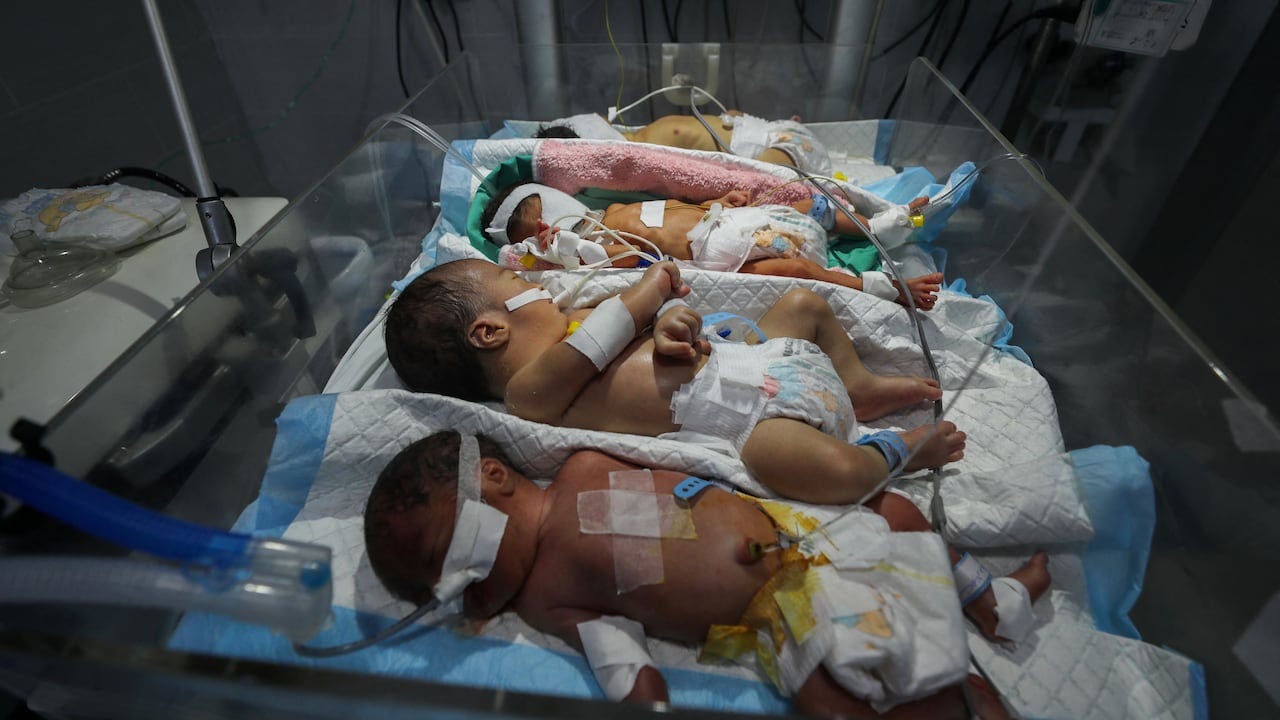
The ongoing Israeli genocide in the Gaza Strip has seen the birth rate in the besieged enclave plunge significantly. The Gaza Ministry of Health reported 17,000 births in the first half of 2025, compared with 29,000 during the same period in 2022. One in three children are born prematurely or at low birth weights, or require intensive care, due to the dystopic hell to which the Israelis have reduced the Gaza Strip.
In 2026, around 180 babies are born each day in the Strip, while nearly half of all births are delivered by Caesarean section, many of them emergency procedures, according to figures released in September by the United Nations Population Fund (UNFPA), Ultra Palestine reported. Separately, the number of miscarriages reached approximately 4,000 in the first six months of 2026, three times the number recorded in the final six months of 2025, according to UN Women.
These figures reveal the scale of the risks women face during pregnancy and childbirth in Gaza, where the suffering affects not only mothers’ safety but also the health of their newborns, leaving thousands of mothers facing compounded fears for their own lives and their children’s amid extremely harsh health and humanitarian conditions.
And it is having a catastrophic impact on the mental health of mothers delivering babies during the genocide.
Postnatal depression
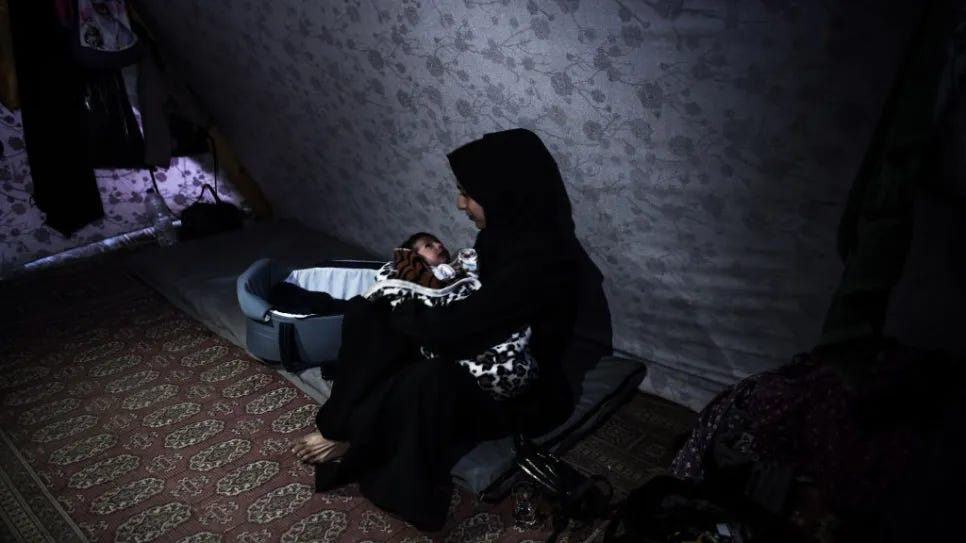
Nada Harzallah never imagined that she would experience motherhood in a tent, far from the comfort of her home and the stability she had wished for her child. In al-Mawasi, Khan Yunis, in the southern Gaza Strip, she tries to care for her little one in harsh conditions, while facing psychological pressures that sometimes exceed what she can bear. Fear of bombings and the repeated displacements are additional burdens she has to carry alongside the responsibilities of motherhood.
Nada told Ultra Palestine that pregnancy and childbirth during the war were not easy, as she constantly worried about her own and her unborn child’s safety. She also worried about the provisions for her child at a time when she lacked many of life’s basic necessities. With displacement continuing and life in a tent persisting, caring for her child was no longer simply a matter of fulfilling daily responsibilities but had become an additional burden weighing on her physically and psychologically.
She explained that there was a stark contrast between the motherhood she had anticipated and the one she was experiencing. There was no peace or tranquility in the days following the birth of her son. Instead, Nada found herself enduring harsh conditions, trying to secure his needs amid endless fears, while lacking sufficient space to rest or regain her psychological balance.
Nada added that the psychological pressure she was experiencing affected her ability to interact with her child. There are times when she feels sad and exhausted and struggles to carry out some daily responsibilities, despite knowing that her little one needs her.
She points out that these feelings leave her caught in an internal struggle between her desire to be a mother capable of caring for her child and the psychological exhaustion that makes even the simplest tasks feel like a burden.
Suicidal thoughts
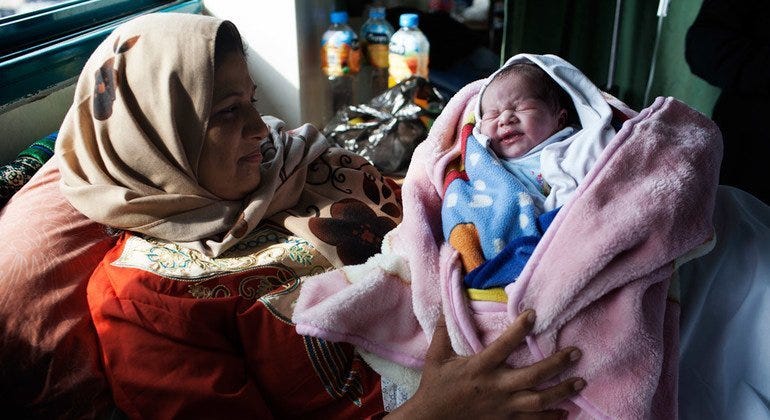
For Maryam Ahmad (name changed), the anxiety of childbirth marked the beginning of an even harsher period. She was responsible for caring for her newborn and her two other children inside a displacement tent that lacked even the most basic comforts while suffering from postnatal depression that led her to contemplate suicide.
Throughout her pregnancy, she worried about her baby’s health and feared that the harsh conditions she had endured would affect the child. When she gave birth, her baby was healthy but weighed just two kilograms. Rather than easing her worries, the birth brought new challenges as she struggled to care for her newborn.
Maryam returned to her tent with no bed or proper place to rest and recover after giving birth. Between caring for her newborn and looking after her two other children, even the simplest daily tasks became difficult. She struggled to stand and sit, sometimes having to rely on her two young children for help.
Maryam told Ultra Palestine that over time physical exhaustion and helplessness took a growing toll on her mental health. She struggled to get through each day, and her depression worsened to the point that she began having suicidal thoughts. The harsh conditions of displacement and the unending genocide made her feel even more exhausted and alone.
She describes her experience as a painful contradiction. On the one hand, she struggled to look at her baby or check on the infant regularly; on the other, anxiety about the baby and fear for the child’s health never left her.
As her condition deteriorated, Maryam secretly sought help from a psychologist in an attempt to escape the cycle of depression, anxiety and the burdens of daily life that trapped her. With psychological support, her condition gradually began to improve, and she regained her ability to go about her life in a way that was closer to normal.
For Maryam, recovery was an attempt to regain herself amid conditions that had not given her enough opportunity to rest after childbirth and to continue caring for her children after her suffering had driven her to the brink of despair.
‘What if there is a bombing?’
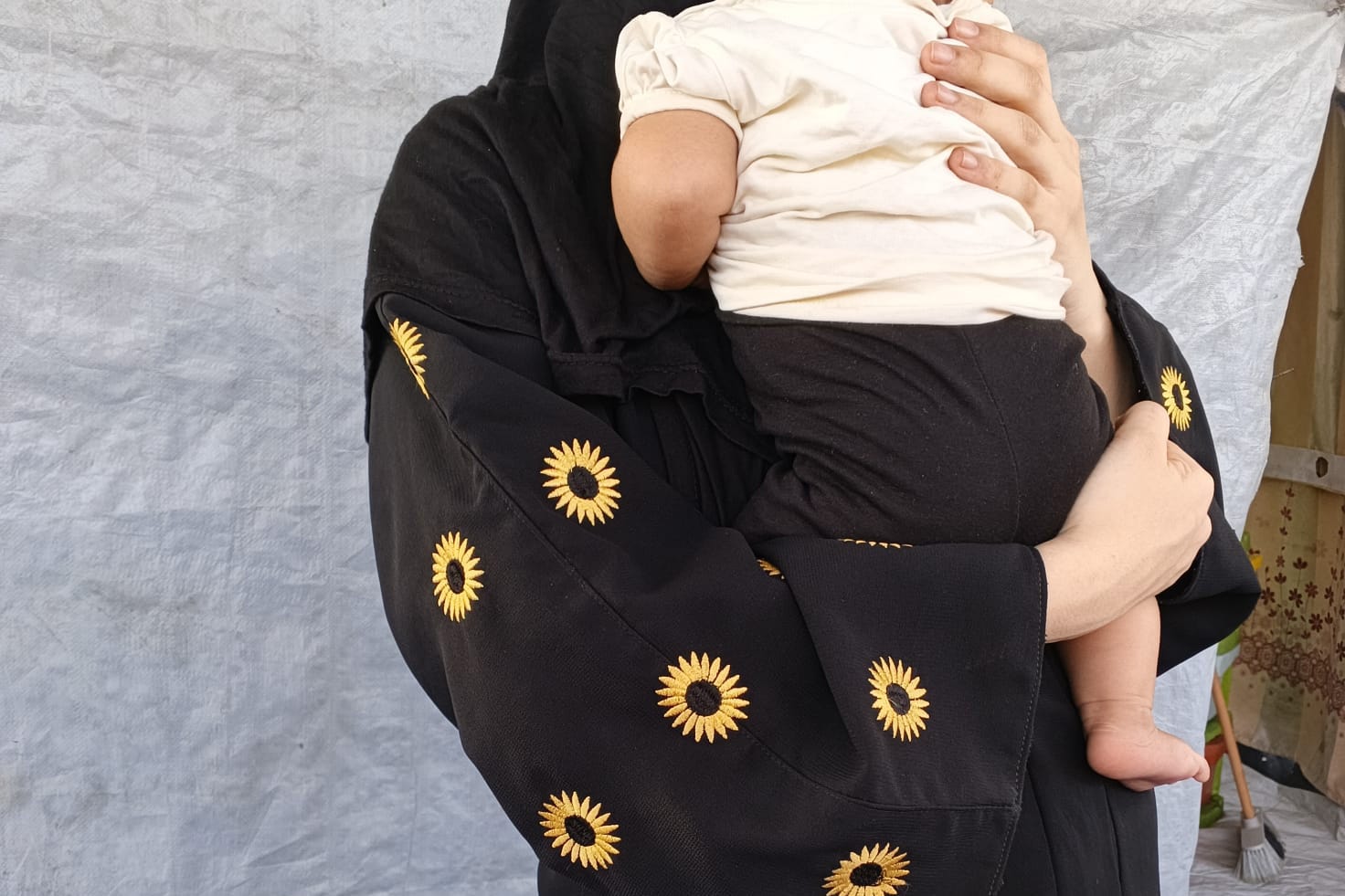
Mais al-Yazji tries to breastfeed her baby girl, but cannot bring herself to look at her. She turns her face away as sadness weighs heavily on her heart.
She finds it difficult to manage even the simplest aspects of motherhood. Getting out of bed takes effort, and sitting is difficult for her. Even the moments she should be sharing with her daughter are overshadowed by exhaustion and fear.Torn between caring for her little girl and struggling to cope herself, she faces a kind of suffering that only those who experience it can truly understand.
Throughout nearly the entire genocide, Mais has been living in a tent that lacks the most basic essentials. There is no comfortable bed, nor are there the conditions for comfort she needs at this stage. Meanwhile, anxiety about her daughter haunts her, and she is weighed down by sadness at a reality she did not choose.
Instead of focusing on her little one’s features and development in the early days of motherhood, she found herself overwhelmed by frightening thoughts that gave her no chance to feel calm.
“Even when I try to close my eyes, I think: What if there is a bombing? What if something happens to my daughter?” she told Ultra Palestine.
She added that the fear often grew so intense that she felt short of breath and found herself crying for no reason, as though the anxiety and sadness that had built up inside her exceeded her capacity to bear.
As time passed, Mais’s exhaustion began to affect her relationship with her newborn daughter. She struggled to hold her or look at her, even though she wanted to care for her and protect her. Mais’s mother noticed her condition and urged her to see a psychiatrist, fearing things might get worse and that Mais might harm herself or her newborn. But afraid of being labelled “mentally ill” rather than having her pain understood, Mais tried to cope alone.
Eventually, she realised that her suffering went beyond ordinary exhaustion and began to understand that she might be experiencing postnatal depression, made worse by displacement and insecurity.
Demographic threat
For Palestinians attempting to piece their lives together and find a semblance of normalcy amid this unending Western-supported Israeli genocide, even the most basic aspects of daily life remain an immense struggle. They continue to grapple with the devastating physical and psychological toll of constant displacement, unbearable losses, and relentless fear.
As the “civilised” world has seemingly abandoned the helpless residents of the Gaza Strip, mothers are left to navigate the hardships of pregnancy, childbirth, and motherhood in the most devastating conditions imaginable. Make no mistake: all of this is by Israeli design. Every Palestinian child is a demographic threat to the genocidal Jewish supremacist state. So it has made even the simplest joys of life an impossible dream for Palestinians.
I’ve never put up a paywall, but this newsletter wouldn’t be possible without your support. If you are able, please consider supporting my work with a paid subscription here, on Ko-fi, or on Patreon. You can also buy me a coffee or two at the link below. Thank you!

I doubt anyone can imagine what it must feel like for a Gazan woman to bring a child into the world under these circumstances.
Any fetus is highly susceptible to the emotional and mental state of the mother carrying it.
Trauma is the result of a birth where the mother was not safe during pregnancy.
I am lost for words. But I can hear my soul weep.
GOD, HELP-