

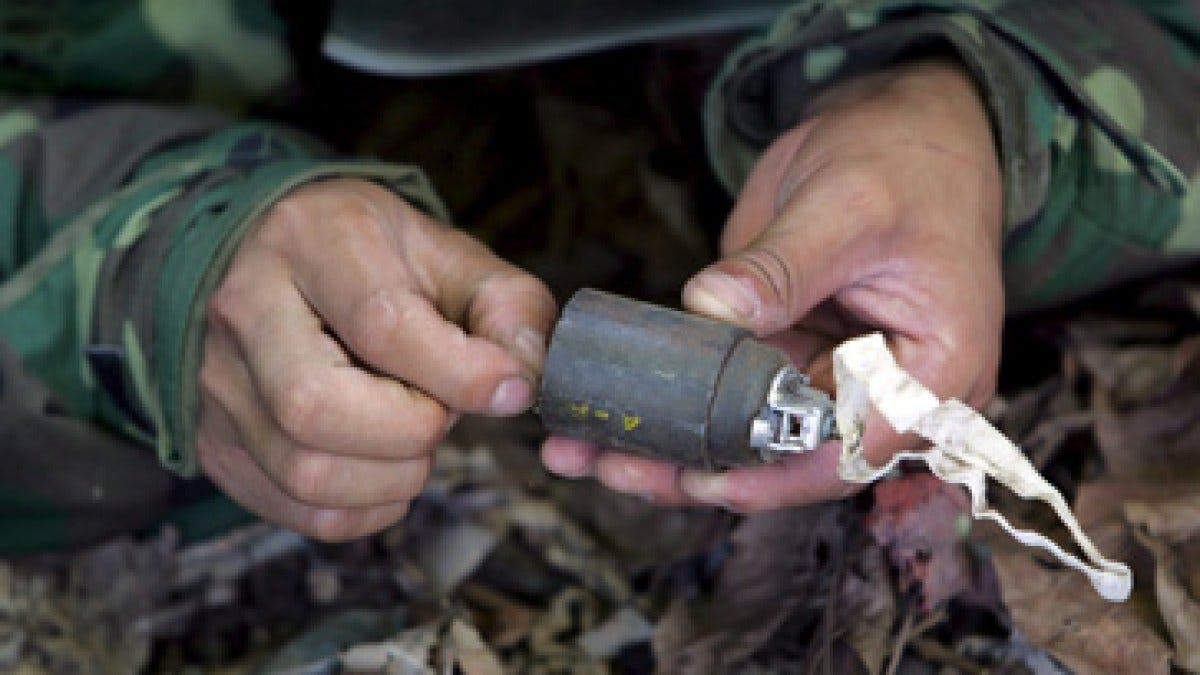
Continuing their long history of flouting international law with total impunity, the Israelis have liberally used banned cluster munitions during their ongoing war against Lebanon, an investigation by The Guardian revealed on Wednesday.
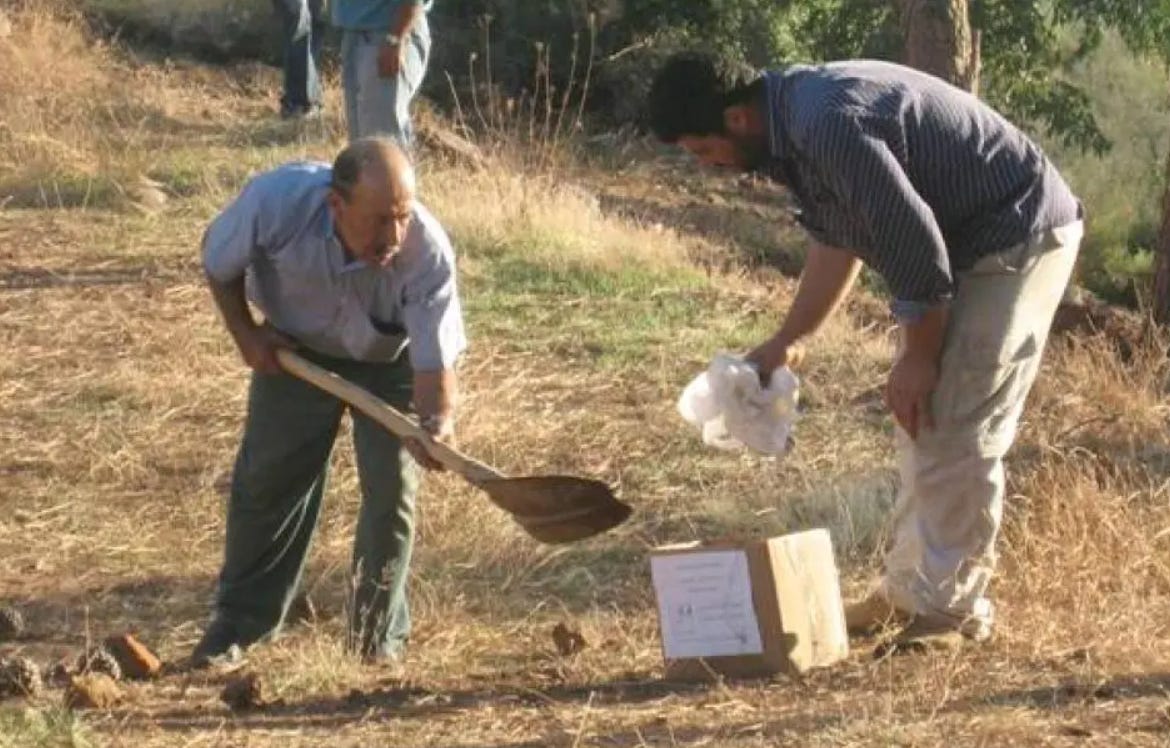
“The images, which have been examined by six different arms experts, appear to show the remnants of two different types of Israeli cluster munitions found in three different locations: south of the Litani River in the forested valleys of Wadi Zibqin, Wadi Barghouz and Wadi Deir Siryan,” The Guardian report adds.
Moreover, the Israelis have been innovating with these murderous weapons, which have a 40 percent dud rate, and continue to pose a danger to anyone who comes near them years, even decades, later. “It would also be the first time that Israel was known to have used the two new types of cluster munitions found – the 155mm M999 Barak Eitan and 227mm Ra’am Eitan guided missiles,” the report states.
It goes on to explain, “Cluster munitions are container bombs which release many smaller submunitions, small ‘bomblets’, over a wide area the size of several football fields. The use of cluster munitions is widely banned as up to 40% of submunitions do not explode upon impact, posing a danger to civilians who might later stumble upon them and be killed when they explode.”
The report adds that “124 states have joined the convention on cluster munitions, which forbids their use, production and transfer.” But Israel, as is the case with nearly all humanitarian law, “is not a party to the convention and is not bound by it.”
“Cluster munitions are banned internationally for a reason,” The Guardian quotes Brian Castner of Amnesty International as saying. “They are inherently indiscriminate and there is no way to employ them lawfully or responsibly, and civilians bear the brunt of the risk as these weapons stay deadly for decades to come.”
Israel has a long history of deploying these destructive weapons in its wars with Hezbollah. Consider this report by Time from 2007 about the use of these banned weapons in southern Lebanon in 2006:
To 17-year-old Rasha Zayoun, the small metal canister with a ribbon attached to the top looked like a toy. Her father, Mohammed, had found it while harvesting wild thyme in a field near her house in the southern Lebanese village of Marakeh, and had taken it home in his bag of herbs.
One evening four weeks ago, Rasha picked up the strange object and played with the ribbon, wondering what it was. “Then I felt a tingle of electricity,” she says. “I threw it from me and it exploded before it hit the floor.”
The blast tore off her left leg and wounded her mother, Alia, and brother Qassem, 21, who were in the room at the time. The “toy” was a cluster bomblet, just one of the estimated 1 million unexploded sub-munitions scattered across the valleys and hills of south Lebanon during last summer’s war between Israel and Hizballah. Cluster bombs — an anti-personnel and anti-armor weapon that disperses dozens or hundreds of grenade-sized bomblets across a wide area — have killed at least 30 people and wounded over 180 according to U.N. figures since the Aug. 14 cease-fire ended the month-long conflict.
The Israeli military has devised murderous frameworks such as the Dahiye Doctrine (through which it relentlessly bombs civilians to put pressure on the enemy military) and the Hannibal Doctrine (a policy of killing its own to prevent capture by the enemy). Israel maintains a deliberate policy of treating every member of the enemy population, including newborn babies and their wheelchair-bound grandparents, as combatants, and therefore legitimate targets for slaughter.
Such a bloodthirsty state obviously has no compunction about deploying weapons that are “inherently indiscriminate” in their lethality.
The Israeli exception
On paper (and only on paper as we have seen over the past 25 months in Gaza and Lebanon), Israel is fully bound by the Geneva Conventions and by customary international humanitarian law, but its non-membership in several key instruments — particularly those concerning weapons, detainee treatment, and accountability — allows it to do as it pleases without external scrutiny, and precludes international efforts to evaluate its conduct.
While treaty non-participation does not grant a licence for violations of humanitarian law, it does affect how rules are interpreted, how conduct is assessed, and how accountability mechanisms can operate.
The Convention on Cluster Munitions is not the only treaty regulating warfare and designed to limit the indiscriminate killing of civilians to which Israel is not a signatory. There are numerous other conventions to which nearly all major states are parties, with the exception of the barbaric Jewish state.
Here is a non-exhaustive list of treaties to which Israel is not a party:
1. Incendiary Weapons (CCW Protocol III)
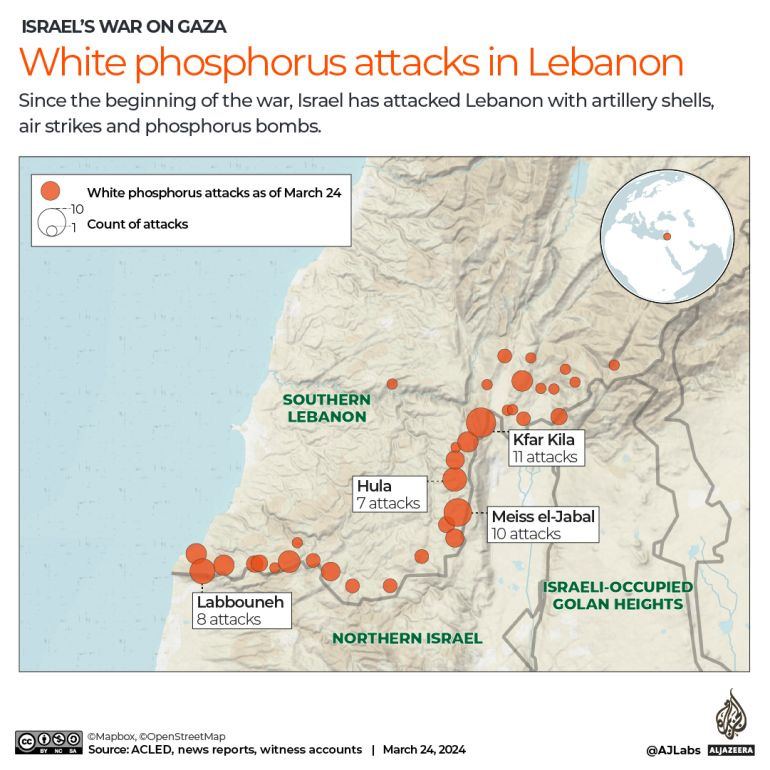
Israel is a party to the Convention on Certain Conventional Weapons (CCW) but not to Protocol III, which restricts the use of incendiary weapons — including air-dropped white phosphorus — particularly in populated areas.
Israel liberally used white phosphorus in the early days of the ongoing Gaza genocide, as well as in Lebanon. It is likely that, realising they had the full licence to use even more destructive weapons, including enriched uranium and bombs that entirely disintegrated bodies, they curtailed the use of white phosphorus in Gaza. It was too mild for their taste.
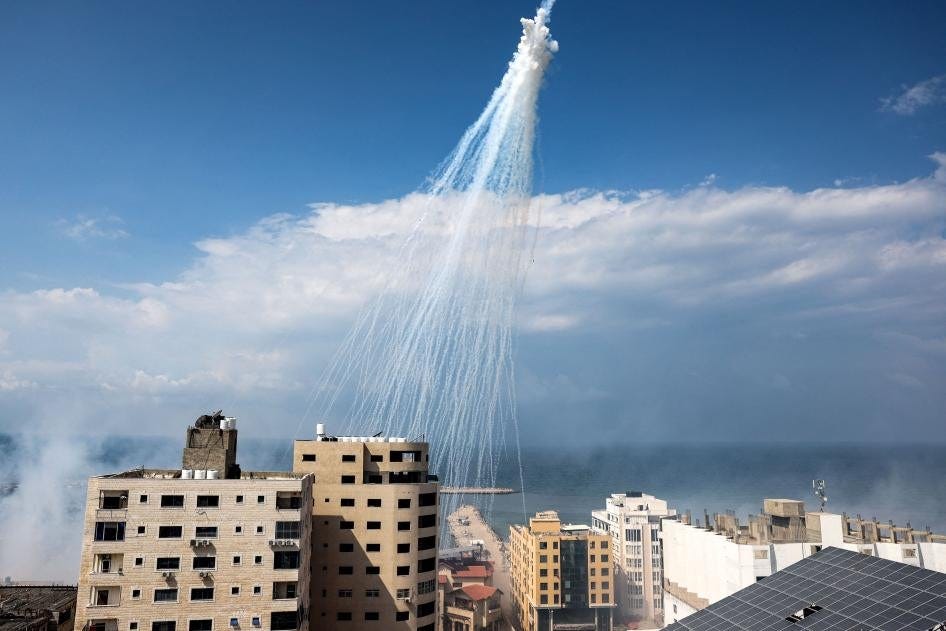
One of Israel’s favourite weapons, white phosphorus has been used in nearly every genocidal assault on Gaza over the years.
Because Israel is not bound by Protocol III, there is no treaty-based restriction specifically governing incendiary munitions. Instead, Israel’s obligations derive from general humanitarian principles, which the Jewish state would argue do not apply to the “human animals” of Gaza and Lebanon.
2. Explosive Remnants of War (CCW Protocol V)
Not being a party to Protocol V means Israel lacks a treaty obligation to systematically clear unexploded ordnance after its latest round of bombing its neighbours or to share detailed information with its victims to help them clear their lands of unexploded ordnance, such as in Gaza or southern Lebanon.
The thousands of tonnes of unexploded bombs in Gaza and Lebanon continue to kill and maim unsuspecting civilians — and will continue to be destructive long into the future as the Israelis have shown no inclination to allow specialised equipment inside Gaza to help with its clean up and eventual reconstruction despite the so-called “ceasefire.”
The situation is identical in southern Lebanon, where Israel continues to bomb all heavy machinery. It’s been nearly a year since Israel and Lebanon agreed to a “ceasefire” on November 27, 2024.
3. Landmines (Mine Ban Treaty)
Israel is not a party to the Mine Ban Treaty, leaving it legally free to retain and use anti-personnel mines.
It was reported in 2023 that Israel was “planting mines where militants had toppled the barrier” on October 7. Since the Israelis are now squatting well inside the Gaza Strip, those plans do not make sense.
Although their use has fallen out of favour during recent assaults, the Israelis have historically used landmines along borders with Lebanon, Syria, Jordan, and Egypt; some of these minefields remain in or near civilian-populated areas.
Being a non-signatory gives the Israelis a licence to deploy them whenever and wherever they wish in the future.
4. Chemical and Biological Weapons
Israel signed but never ratified the Chemical Weapons Convention (CWC) and has not joined the Biological Weapons Convention (BWC). This means Israel is outside the formal verification and inspection regimes governing chemical and biological weapons. It is, however, still bound by customary law and by the 1925 Geneva Protocol, which bans the use of chemical weapons.
But it is no obstruction to Israel. The use of biological weapon by the Jewish state has been recorded as far back as 1948, during the Nakba.
“The code name of the biological warfare campaign - ‘Cast Thy Bread’ (in Hebrew: Shallah Lahmekha, from “cast thy bread upon the waters” (shallah lahmekha ‘al pnay hamayim, Ecclesiastes, 11:1) is partially mentioned, as shallah, in a memoir published in 2000 by Aryeh Aharoni, a Palmah officer in 1948, who unequivocally asserted that the operation aimed at infecting water used by the invading Egyptian army,” according to Israeli historians Benny Morris and Benjamin Z. Kedar.
So far, there is no confirmed evidence by the Organisation for the Prohibition of Chemical Weapons (OPCW) or UN teams that Israel has used chemical weapons in Gaza or Lebanon. Although allegations have been made against Israel, in the absence of membership in the CWC — and therefore of inspection rights — independent verification is impossible.
5. Nuclear Treaties (NPT, CTBT, TPNW)
Despite being an unofficial nuclear power, Israel is not a party to the Nuclear Non-Proliferation Treaty (NPT), has signed but not ratified the Comprehensive Nuclear-Test-Ban Treaty (CTBT), and has not joined the Treaty on the Prohibition of Nuclear Weapons (TPNW).
These decisions allow Israel to continue enriching weapons-grade uranium and build and stockpile nuclear warheads without any oversight by international agencies. Iran, for example, is obligated to allow the International Atomic Energy Agency (IAEA) inspections as a signatory to the NPT.
Israel has a history of sabotaging nuclear programmes in Muslim nations. It bombed Iraq’s nuclear programme in 1981, planned (with India) to scupper Pakistan’s nuclear ambitions in the 1980s, and has consistently assassinated Iran’s nuclear scientists and sabotaged its nuclear programme to prevent any Islamic nation from becoming a nuclear power.
With American backing and military support, Israel even bombed Iran in June on the pretext of halting Iran’s development of the bomb — which no international agency claims Iran is building.
In a bid to protect its own nuclear programme, however, Israel went so far as to kill an American president — without repercussions.
6. Additional Protocols I & II to the Geneva Conventions
Israel is not a party to the 1977 Additional Protocols, which expand protections for civilians during international and non-international armed conflicts.
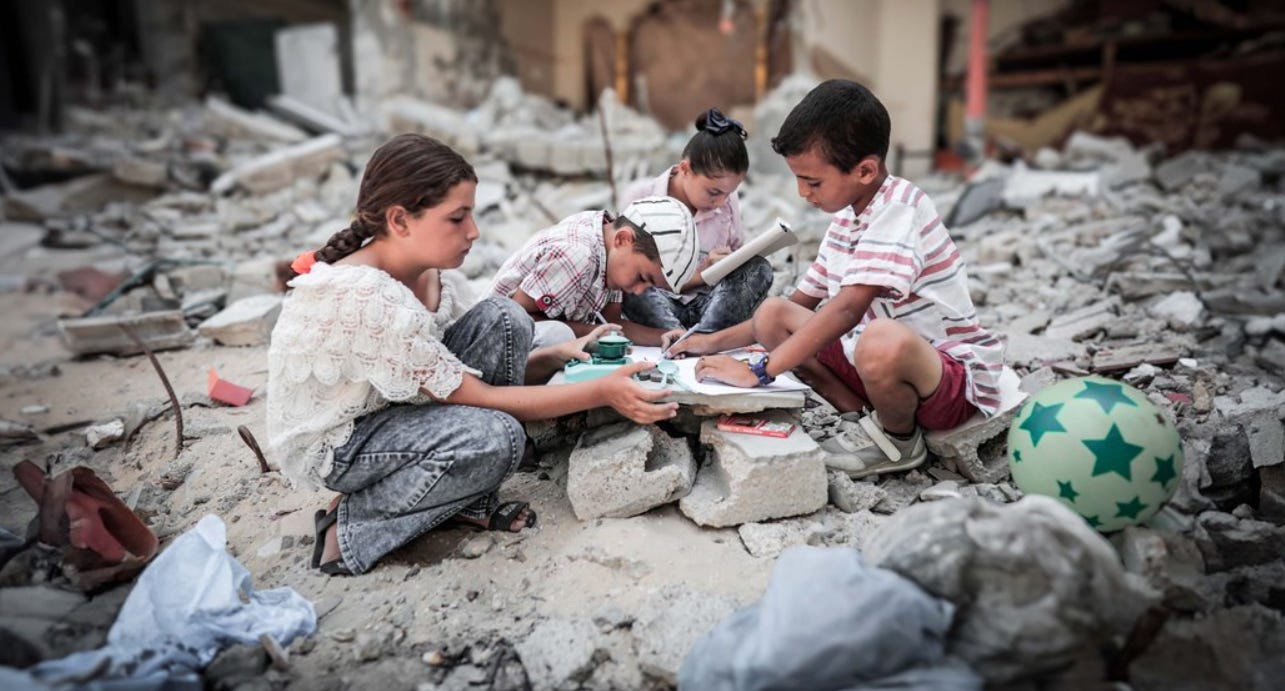
When Israelis fight, their primary targets, as has been seen in high-definition in Gaza and Lebanon over the past two years, are always those protected under these protocols. Israelis have slaughtered tens of thousands of children, hundreds of doctors and other medical professionals, teachers, municipal workers, fishermen etc.
The Jewish state argues that many provisions of these protocols are “customary” and voluntarily followed, but non-ratification gives it interpretive flexibility on key issues such as:
Defining military targets in urban environments
Proportionality and anticipated collateral damage
Treatment of fighters who are not regular combatants
Rules governing sieges, blockades, and humanitarian access
This has allowed Israel to advance legal interpretations that differ from those applied by states that have ratified the Protocols.
The people of Gaza and Lebanon have borne the consequences of this twisted wordplay, as the Israelis have seen command centres under hospitals, tunnels beneath dilapidated schools full of children, and have dropped 2,000-pound bombs on tent clusters full of displaced Palestinians, burying dozens underground.
7. ICC Rome Statute
Israel signed but did not ratify the Rome Statute, placing it outside automatic jurisdiction of the International Criminal Court (ICC). This does not shield the Israelis from investigation when they commit crimes occur on the territory of a State Party (e.g., Palestine, recognised by the ICC as a State Party), but it does limit cooperation and restricts ICC access.
It has not cooperated with the ICC as the court pursues Netanyahu and Gallant for their war crimes in Gaza. Despite an international arrest warrant issued by the ICC, the war criminal duo remains free to commit more war crimes. Moreover, Israel is safe in the knowledge that its Western crime partners — who enthusiastically back all its war crimes — will never enforce these warrants.
Going a step further, Israel has been documented as spying on ICC officials and threatening them with consequences if they dare investigate Israeli criminals. Israel is a de facto mafia state — only without honour, unlike the mafiosi.
8. Torture and Detention Practices (CAT and OPCAT)
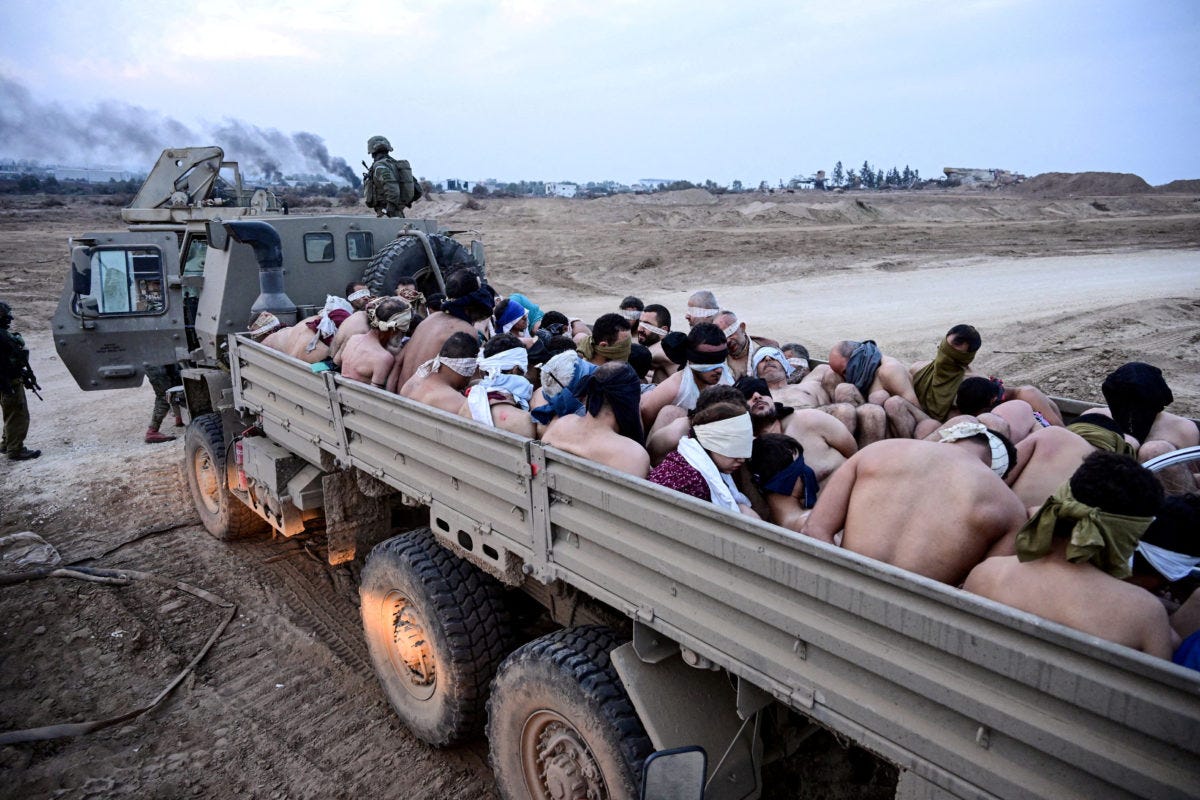
Israel has ratified the Convention Against Torture (CAT) but has not joined the Optional Protocol to the Convention Against Torture (OPCAT). As a result, Israel must prohibit torture and report periodically to the UN, but is not obligated to allow unannounced international inspections of detention or interrogation facilities.
In 1999, Israel’s Supreme Court prohibited torture but allowed a “necessity defence” in extreme cases — thereby making the Jewish state the only first-world country to have legalised torture in its dungeons.
With no OPCAT inspection to temper their behaviour, the Israelis have been subjecting detained Palestinians and Lebanese to untold horrors over the past two years. Israeli military and police detention camps have systematically subjected detainees to severe beatings, food deprivation, stress positions, solitary confinement, sleep deprivation, systematic rape, and harsh conditions.
Even an Israeli organisation — Physicians for Human Rights - Israel (PHRI) — has published a report documenting savage treatment of Arab detainees in Israeli dungeons. It lists 94 killings of Palestinians in detention and adds that “the true number of deaths is likely significantly higher than those documented here.”

Although it is not a convention, being a state aligned with the United States has — at least until this year — been a foolproof guarantee of not being attacked by another US ally.
However, the Israelis shattered even that unofficial convention when they attacked Qatar — not just any ally, but one that is home to the United States’ largest military base in West Asia and is aligned with nearly every US depravity in the region — in September this year.

It is worth reminding that for the Israelis signing or not signing on to these conventions is merely an academic exercise.
It has become abundantly clear over the past two years that no international convention, nor even the norms of human behaviour, binds the Jewish state. It kills whoever it wills, whenever it wills, however it wills, and never faces any consequences for its criminal behaviour. Its crimes are sanctified at international forums. Its criminality is limitless. No convention or treaty can restrain it.
Unfortunately, paid subscriptions have nearly dried up over the past few months. They are a lifeline, especially after this happened. If you’re able, please consider a paid subscription here or on Ko-fi or Patreon. You can also buy me a coffee or two at the link below. Thank you!
Everyone knows Israel does what it wants because it knows the consequences are nonexistent. In their deranged minds, they’re superior beings and that the rules only apply to inferior beings. In reality, they’re a bunch of mass-murdering squatters who rape, steal, lie, threaten, and beg to get what they want. They're the anchor around the neck of humanity, and we must free ourselves before we sink to the bottom of the ocean.
Doesn't your subhead summarize the bottom line?
"It is worth reminding that for the Israelis signing or not signing on to these conventions is merely an academic exercise"
Zionists have declared themselves THE exception to the remainder of species homo sapiens; they are above us all. Rest of us are hominins, perhaps, but untermenschen nonetheless.
Israel needs to develop a bloody boomerang weapon. Come on. Australian anti-Zionists: you should be able to help with that.